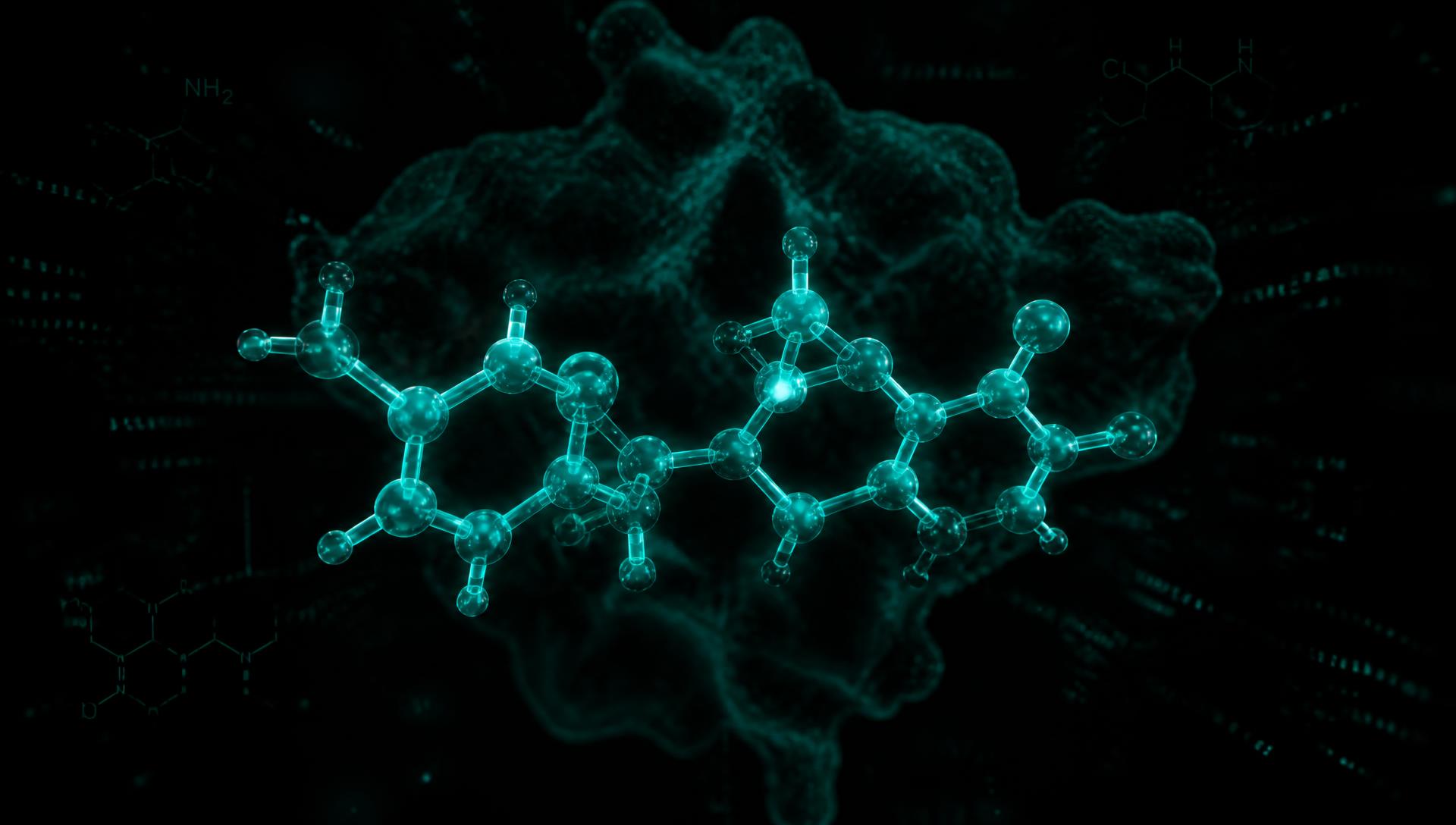
Projects
Our Research Portfolio
General Biotech projects are organized under the GB Project Series, with each program addressing a defined biological or biomedical challenge.
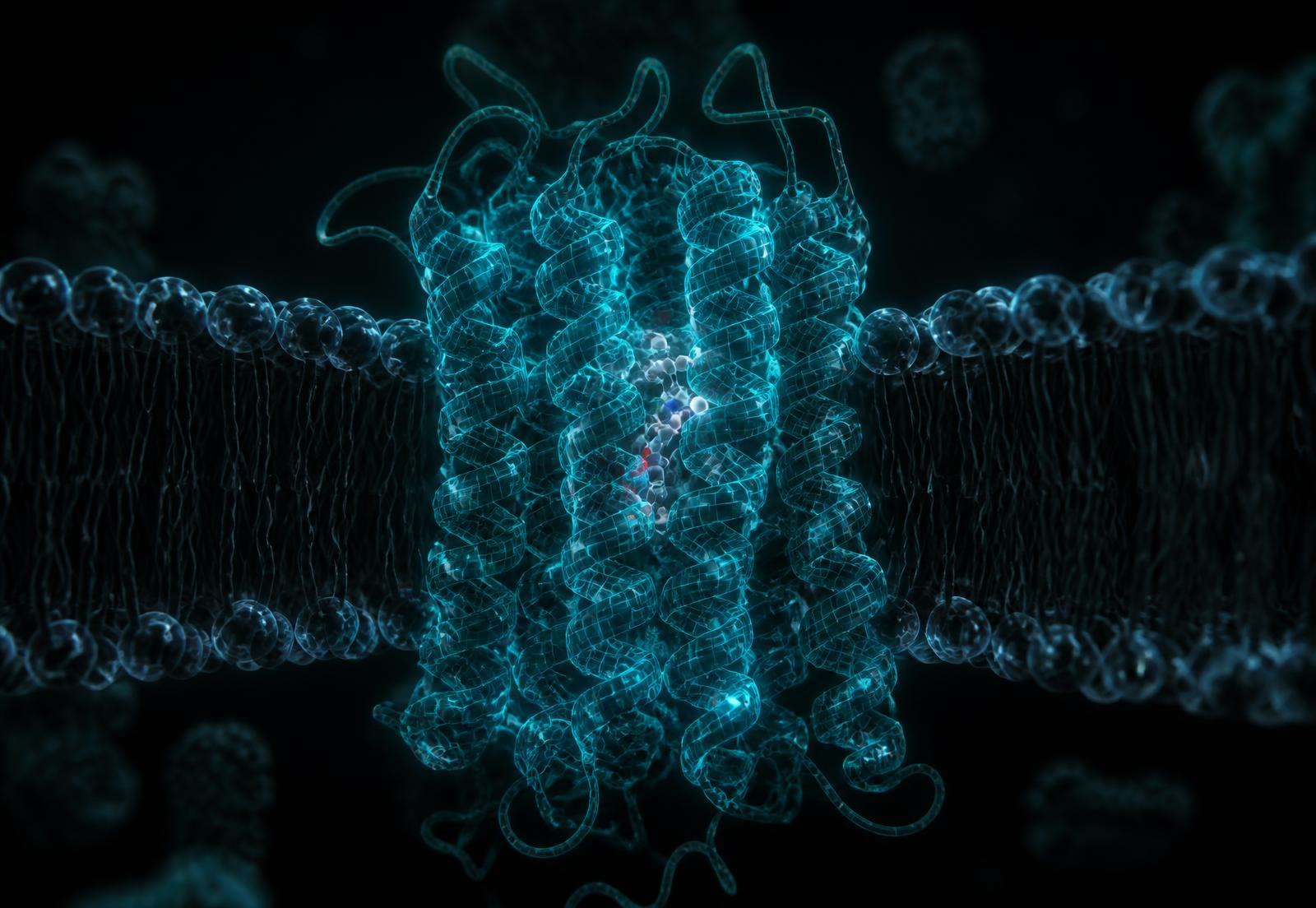
GB-102 — Status: Research & Development
Neurochemical Therapeutic Architecture
GB-102 is a conceptual therapeutic molecule developed through computational biochemical research. The project investigates a multimodal neurochemical architecture intended to influence biological systems involved in mood regulation and depressive disorders. Rather than approaching antidepressant activity through a single biological mechanism, GB-102 explores how multiple molecular interactions could potentially contribute to a broader therapeutic effect.
- Multimodal neurochemical architecture
- Computationally designed and evaluated
- Preclinical conceptual research program
GB-102 — Research Areas
What the project investigates
Neurotransmitter regulation
Monoaminergic signaling
Receptor interaction
Molecular affinity
Blood-brain barrier compatibility
Pharmacokinetic characteristics
Predicted metabolic behaviour
Potential biological liabilities
Computational tools are used to analyse molecular structure, receptor interactions, predicted ADME characteristics and other properties relevant to the theoretical behaviour of the compound.
GB-102 — Development Objective
From hypothesis to synthesis
GB-102 is currently a preclinical conceptual research program. Computational results are used to establish hypotheses and guide future research. They do not replace laboratory experiments, toxicological evaluation or clinical validation.
The long-term objective of the project is to establish sufficient scientific evidence for collaboration with qualified research organizations capable of progressing the compound toward physical synthesis and experimental evaluation.
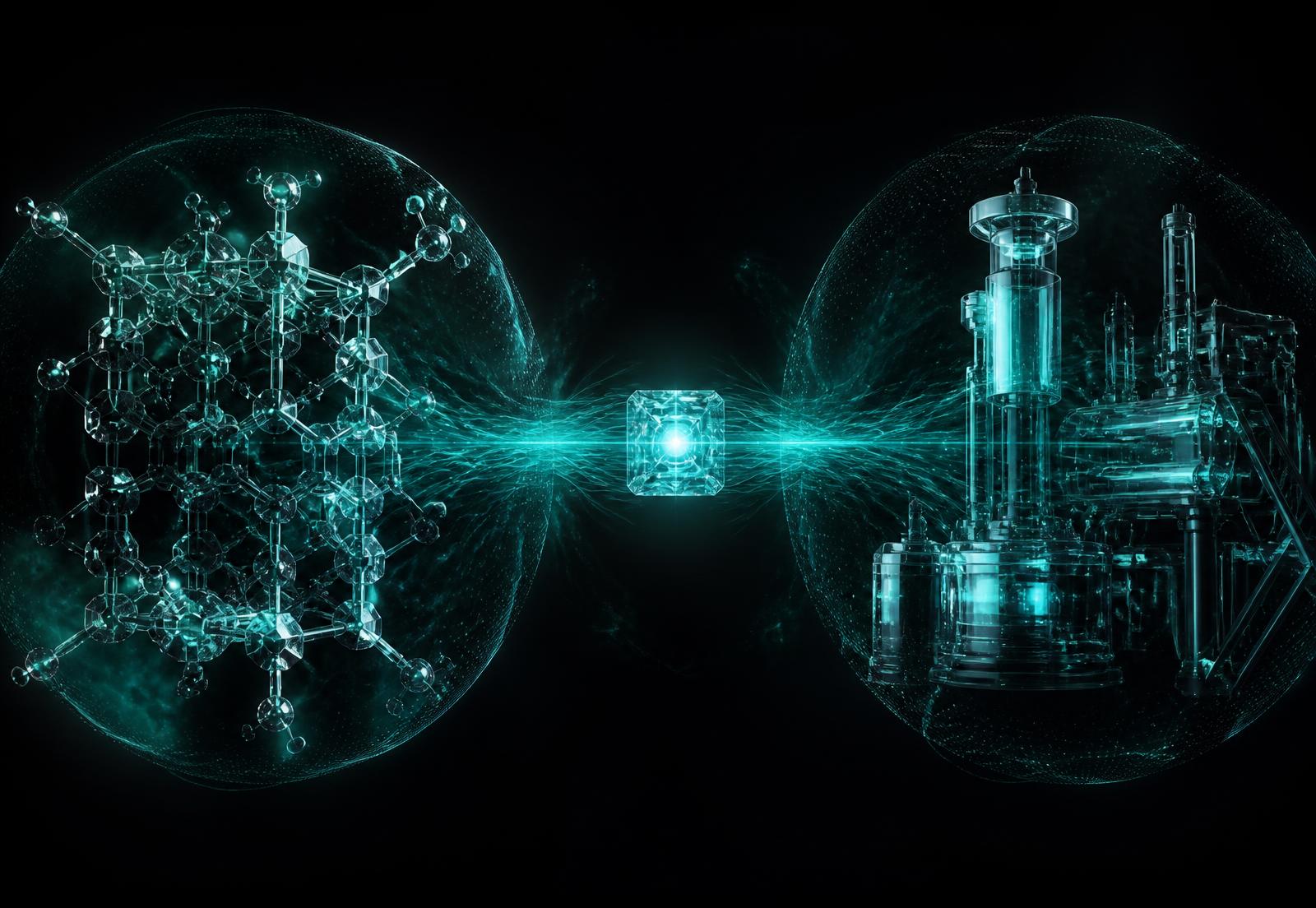
GB-103 — Status: Early Development
Neuromuscular Interface Technology
How can an artificial limb respond more naturally to the biological intentions of its user? When an individual loses a limb, portions of the nervous and muscular systems responsible for controlling that limb may remain capable of generating biological signals. GB-103 explores methods for detecting and interpreting residual neuromuscular activity and converting those signals into commands for an advanced prosthetic system.
- No direct brain implantation required
- Signals taken from the residual neuromuscular system
- Multidisciplinary research program in early development
GB-103 — The Concept
The interaction the system investigates
Instead of requiring direct brain implantation, the project focuses on signals available within the residual neuromuscular system. The intended system would investigate the interaction between:
Residual nerves
Muscle activation
Biological electrical signals
Signal acquisition technologies
Computational interpretation
Prosthetic control systems
Mechanical limb movement
The long-term objective is to improve the relationship between human biological intention and prosthetic movement. A successful system could potentially allow prosthetic devices to respond to increasingly natural patterns of muscular or neural activity.
GB-103 — Development Strategy
A multidisciplinary research program
Neurophysiology
Understanding the surviving biological pathways responsible for limb control.
Signal Acquisition
Detecting neuromuscular electrical activity.
Computational Interpretation
Translating biological patterns into machine-readable commands.
Biomedical Engineering
Integrating those commands into prosthetic technology.
Clinical Collaboration
Working with specialists and clinical institutions to evaluate the practical requirements of the system.
Research Responsibility
Reading this portfolio
General Biotech develops early-stage biotechnology concepts and research programs. Information presented regarding experimental projects should not be interpreted as evidence of clinical efficacy, regulatory approval or medical suitability unless explicitly stated.
Computational predictions and theoretical models require experimental validation before conclusions regarding biological or therapeutic performance can be established.